How Ledger Immutability Features Alter Dispute Resolution Protocols in Virtual Casino Settings for European Users
Écrit par Ellis Krause · 17/11/2026

How Ledger Immutability Features Alter Dispute Resolution Protocols in Virtual Casino Settings for European Users
Virtual casino platforms serving European users rely on distributed ledger technology to record every transaction and game outcome in sequences that resist alteration once confirmed, and this immutability directly reshapes how disputes over bets, payouts, and account balances reach resolution. European operators integrate these ledgers with smart contract protocols that execute automatically when predefined conditions trigger, which reduces the scope for manual intervention during disagreements. Observers note that players and platforms alike examine the permanent chain entries rather than relying solely on internal server logs when conflicts arise.
Core Mechanics of Immutability in Casino Ledgers
Distributed ledgers store each bet placement, spin result, and fund transfer as a block linked to prior entries through cryptographic hashes, so any attempt to modify a single record breaks the chain and becomes immediately detectable across network nodes. In virtual casino environments this setup means that once a wager settles on the ledger, neither the operator nor the user can retroactively change the outcome data without consensus from the broader network. Researchers at academic institutions studying blockchain applications in gaming have documented how this feature eliminates the possibility of hidden adjustments that previously fueled disputes in centralized systems. European users therefore approach resolution processes with access to the same verifiable dataset that the platform holds, which shifts the focus from evidence collection to interpretation of the recorded events.
Impact on Traditional Dispute Pathways
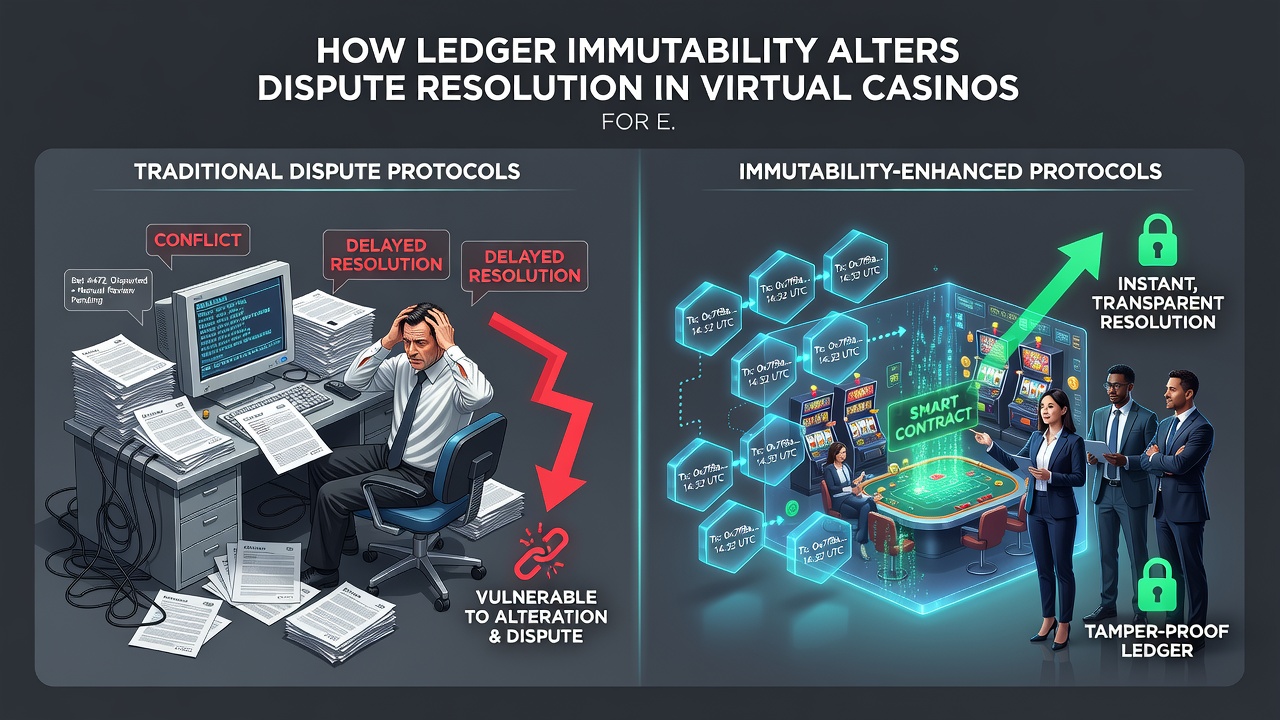
Before widespread ledger adoption, European virtual casino disputes often required users to submit screenshots, transaction histories from payment providers, and appeals through customer support teams that operated under internal policies subject to operator discretion. Immutability changes this dynamic because the ledger provides a single source of truth that external auditors or regulatory bodies can inspect without needing proprietary access. Data from industry reports indicates that platforms now route many initial claims directly to on-chain verification tools, where users query the specific block containing their transaction details. When mismatches occur between user expectations and ledger entries, resolution protocols incorporate multi-signature requirements or time-locked appeals that reference the immutable record before any funds move.
But here's the thing: the permanent nature of these records also limits options for reversal even when external factors like network latency or interface errors affect gameplay. European regulatory frameworks, including those aligned with the Digital Services Act, require operators to maintain transparent audit trails, and immutable ledgers satisfy this demand while simultaneously constraining the flexibility of chargeback mechanisms through traditional banks. Users in countries such as France, Germany, and the Netherlands encounter standardized procedures that begin with ledger review before escalation to licensed dispute resolution services.
November 2026 Regulatory Developments Across Europe
In November 2026, several European jurisdictions plan to implement updated guidelines on blockchain-based gaming that explicitly address how immutable records integrate with consumer protection rules, and these changes require platforms to publish simplified query interfaces for ledger data. Government agencies in multiple member states have coordinated with industry groups to standardize the format of dispute submissions that reference on-chain proofs. Figures from recent consultations reveal that operators expect a measurable drop in unresolved claims once users gain direct tools to verify their positions against the permanent ledger. Those who manage virtual casino platforms report that training support teams now emphasizes ledger interpretation alongside traditional customer service skills.
Case Examples from Operational Platforms
One documented instance involved a French user who contested a roulette payout amount after a claimed software glitch, yet the ledger entry showed the exact stake and multiplier applied at the moment of settlement. Resolution occurred within hours once both parties confirmed the cryptographic proof rather than days of back-and-forth emails. Similar patterns appear in German and Spanish markets where operators have adopted hybrid protocols that combine ledger verification with optional third-party arbitration when interpretation of game rules remains contested. Research indicates that such systems maintain user confidence because the immutable trail prevents operators from altering outcomes post-event while also protecting platforms from fraudulent reversal requests.
What's interesting is how these features interact with payment rails common among European users, including SEPA transfers and certain stablecoin options that settle directly on compatible ledgers. When disputes involve these methods, the chain record links the deposit, wager, and withdrawal in a sequence that external payment processors can reference without additional documentation. Industry organizations such as the European Gaming and Betting Association have published frameworks that encourage operators to embed ledger query links in every transaction confirmation sent to users.
Future Adjustments in Protocol Design
European platforms continue to refine dispute workflows by adding optional layers such as zero-knowledge proofs that allow verification without exposing full transaction details, and this approach aligns with privacy expectations under GDPR while preserving the benefits of immutability. Academic studies from institutions across the continent examine how these combined techniques affect resolution speed and user satisfaction metrics over multi-year periods. Observers note that the shift places greater emphasis on clear rule communication upfront because post-event changes become technically infeasible once entries commit to the ledger. Platforms therefore invest in real-time explanations of game mechanics that reference the same data structures used for later verification.
According to information available through the European Commission portal on digital finance, upcoming technical standards will further specify requirements for ledger accessibility during disputes, and these standards aim to create consistent experiences for users regardless of which member state hosts their chosen platform. The result is a protocol landscape where immutability serves as both a safeguard and a constraint that shapes every stage of conflict management.
Conclusion
Ledger immutability has become a foundational element in how virtual casinos serving European users handle disagreements, replacing discretionary reviews with reference to permanent, auditable records. This transition affects everything from initial claim submission to final arbitration outcomes while aligning with broader regulatory expectations around transparency and consumer protection. As November 2026 approaches and new guidelines take effect, the integration of these features will likely expand across additional markets and payment types. The overall structure encourages proactive design of clear game rules and accessible verification tools rather than reliance on after-the-fact adjustments.