How Stablecoin Volatility Shapes Reward Redemption Timelines at Blockchain-Enabled Entertainment Venues for European Audiences
Écrit par Viktor Albrecht · 6/10/2026

How Stablecoin Volatility Shapes Reward Redemption Timelines at Blockchain-Enabled Entertainment Venues for European Audiences
Stablecoin volatility refers to temporary deviations from the intended one-to-one peg with fiat currencies, and such fluctuations directly influence when users at blockchain-enabled entertainment venues can access their rewards. Venues operating across Europe integrate stablecoins like USDC and USDT into loyalty programs where points convert into redeemable credits, yet price swings force operators to adjust processing windows to maintain reserve balances. Data from multiple exchanges shows that even brief depegs lasting hours can extend redemption timelines from immediate to multi-day holds while systems recalibrate asset values.
Mechanics of Stablecoin Integration in Venue Systems
Blockchain-enabled entertainment venues track rewards through smart contracts that monitor user activity and issue stablecoin-denominated credits, and these contracts often include oracles that pull real-time price feeds from decentralized exchanges. When volatility spikes occur, the contracts pause automatic redemptions until the feed stabilizes within predefined bands, which prevents venues from paying out more value than they hold in reserves. Observers note that European platforms serving audiences in Germany, France, and the Netherlands have adopted tiered delay protocols where minor deviations trigger 24-hour reviews while larger swings extend holds to 72 hours or more.
Regulatory Context Shaping European Practices
The Markets in Crypto-Assets framework implemented across the European Union requires operators to maintain adequate liquidity buffers for any tokenized rewards, and this requirement intersects with stablecoin volatility by mandating additional verification steps during redemption requests. In October 2026, updates to reporting thresholds under this framework took effect, compelling venues to document every instance where volatility delayed user access to rewards. Venues comply by routing redemption flows through regulated custodians who apply dynamic holds calibrated to market data feeds, ensuring alignment with capital adequacy rules set by national authorities in member states.
Research indicates that venues using multiple stablecoin issuers experience shorter average delays because they can switch between assets when one shows instability, whereas single-issuer setups face longer waits. One study conducted by academic researchers at a European business school examined transaction logs from several platforms and found that redemption completion rates dropped by 18 percent during documented volatility events in the preceding year.
Operational Adjustments at Specific Venues
Operators respond to volatility by publishing updated redemption schedules that users access through venue dashboards, and these schedules incorporate buffers derived from historical volatility metrics collected over rolling 30-day periods. Venues in Scandinavia, for instance, have introduced automated alerts that notify users when a pending reward enters a review queue due to detected price movements exceeding 0.5 percent. Such measures protect both the venue and the user by avoiding premature payouts that could result in underfunded accounts after the stablecoin returns to its target value.
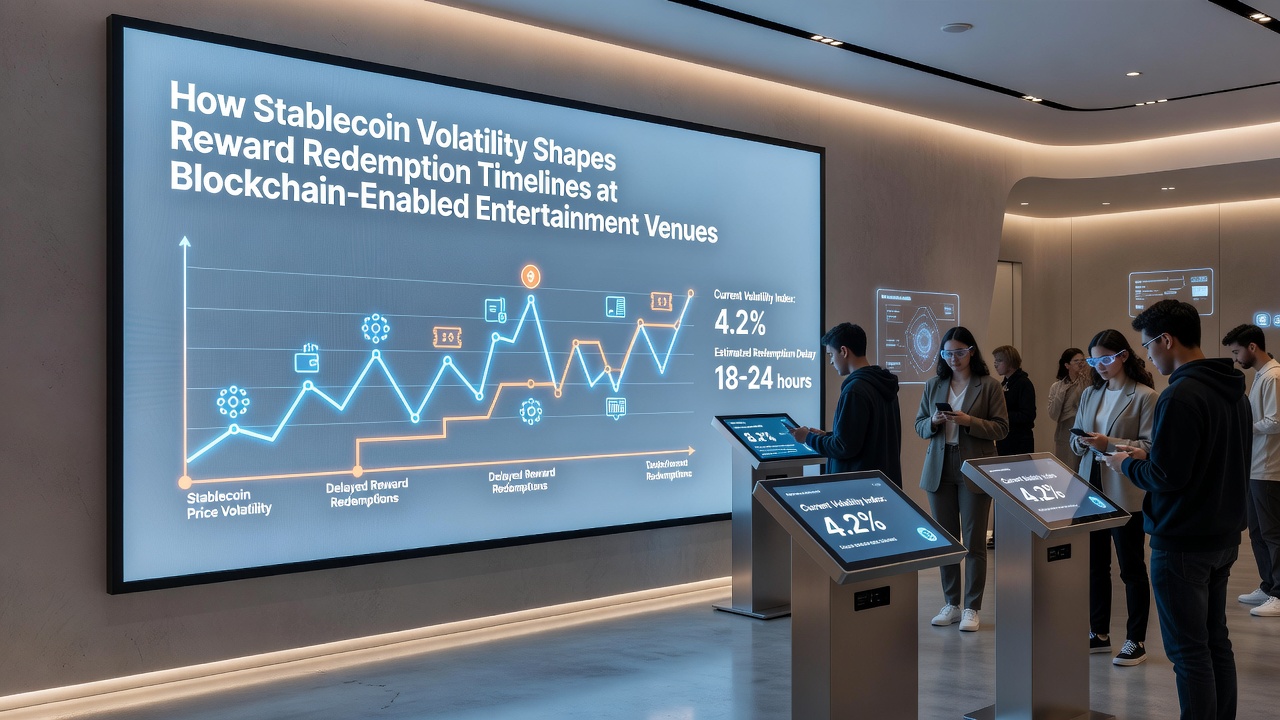
Industry reports compiled by research institutions tracking digital asset adoption show that average redemption timelines lengthened from 4 hours to 36 hours across sampled European venues during periods of elevated stablecoin volatility in 2025. Those same reports highlight that venues incorporating on-chain hedging instruments reduced the frequency of extended holds by reallocating portions of reserves into derivative positions that offset short-term price movements.
Data Patterns Across European Markets
Figures released by the European Securities and Markets Authority reveal correlations between stablecoin trading volumes on major exchanges and subsequent delays reported by entertainment platforms. Higher volumes often precede volatility episodes, prompting venues to lengthen processing windows proactively. Users in southern European markets encountered more frequent timeline extensions than those in northern regions, partly because local platforms relied more heavily on a narrower set of stablecoin options with documented liquidity constraints during stress periods.
Take one platform that adjusted its smart contract parameters after a March 2025 depeg event, resulting in redemption requests now routing through a multi-stage verification process that includes both price oracle checks and manual reserve audits for amounts above certain thresholds. This approach reduced instances of negative reserve impacts while extending the median timeline for large redemptions to 48 hours.
Conclusion
Stablecoin volatility continues to drive adjustments in reward redemption timelines at blockchain-enabled entertainment venues serving European audiences, with operators relying on contract-level safeguards, regulatory compliance measures, and diversified asset strategies to manage exposure. Data from regulatory filings and academic analyses document these patterns clearly, showing how even modest price deviations trigger measurable extensions in processing windows. As frameworks evolve and venues refine their protocols, the relationship between volatility metrics and redemption schedules remains a central operational factor across the sector.